Stories
WATCH: What if fortifying salt could reduce the risk of birth defects?
August 19, 2026

WP_Term Object
(
    [term_id] => 2025
    [name] => Stories
    [slug] => all-stories
    [term_group] => 0
    [term_taxonomy_id] => 2025
    [taxonomy] => news-category
    [description] => Discover the personal stories of people whose lives have been impacted by better nutrition, and those working tirelessly to deliver it, and what’s top of mind for our technical experts as they share the latest on cutting-edge nutrition research, policy updates, and implementation guidance.
    [parent] => 0
    [count] => 364
    [filter] => raw
)


Q&A: Meet a lead researcher exploring how table salt can prevent birth defects
In this Q&A, Dr. Homero Martinez shines light on a ground-breaking research trial in Ethiopia testing something that had never been done outside the lab: double-fortifying salt to improve folate levels and reduce the risk of neural tube defects.
Posted on October 23, 2026
What if regular table salt could prevent birth defects? A team of researchers set out to see if this was possible.
Adequate folate levels before and during early pregnancy are key for preventing neural tube defects (NTDs), such as spina bifida and anencephaly. These conditions develop in the first weeks of pregnancy, often before someone knows they are pregnant, and can lead to stillbirth, early childhood death or lifelong disability.
More than a decade ago, researchers at the University of Toronto in Canada, with support from the Micronutrient Initiative (now Nutrition International), tested whether iodized salt, widely adopted globally to prevent iodine-deficiency disorders, could also be fortified with folic acid. The trial was successful — in a lab setting and using highly-refined salt. But evidence was still lacking to show whether this innovation could move beyond the lab and be replicated at an industrial scale in a country where there was a direct need.
Ethiopia, which has one of the highest rates of NTDs in the world, offered an urgent setting to put this research into practice. From 2022 to 2025, Nutrition International worked with the Ethiopian Public Health Institute (EPHI), the University of California, Davis, and the University of Toronto, with support from the Gates Foundation, to conduct a clinical research trial. The study explored whether iodized table salt could be double-fortified with folic acid in Ethiopia, produced through local industry and accepted by consumers. It also assessed whether the regular consumption of double fortified salt over a period of six months could improve folate status in women of reproductive age, reducing the risk of a pregnancy affected by NTDs. The findings, recently published in The American Journal of Clinical Nutrition, concluded that adding folic acid to iodized salt safely and effectively improved women’s folate status without compromising their iodine status.
The Government of Ethiopia is now leading efforts to take this evidence toward wider scale. In January 2026, the Ministries of Health, Industry, and Trade and Regional Integration joined EPHI, Nutrition International and partners at a national meeting to advance plans for scaling up double-fortified salt at the national level.
Dr. Homero Martinez, Nutrition International’s Senior Technical Advisor, Large-Scale Food Fortification, Research & Development, was the lead researcher on the study. We spoke with him about how the research came together, what it revealed and what this means for the future.
First of all, why salt? How does salt become a leading force to protect against birth defects?
Dr. Martinez: Research by the University of Toronto had shown that iodized salt could be double-fortified with folic acid using the spray technology widely used in Ethiopia, which remained stable in the salt for up to six months. So theoretically, if someone used this product as regular salt at home, it could help improve folate levels and reduce the risk of NTDs.
In many countries, wheat flour is fortified with folic acid, but consumption of industrialized wheat is low in Ethiopia (around 30% in most urban areas). Conversely, salt reaches nearly the entire population, with close to 100% of households having iodized salt at home. Ethiopia is also self-sufficient in salt production and has already successfully built a network of facilities for iodizing salt to address iodine deficiency. This meant the infrastructure was potentially already there for large-scale fortification of salt with folic acid.
But before the government could endorse and support the production of double-fortified salt, there were still some assumptions we needed to test.
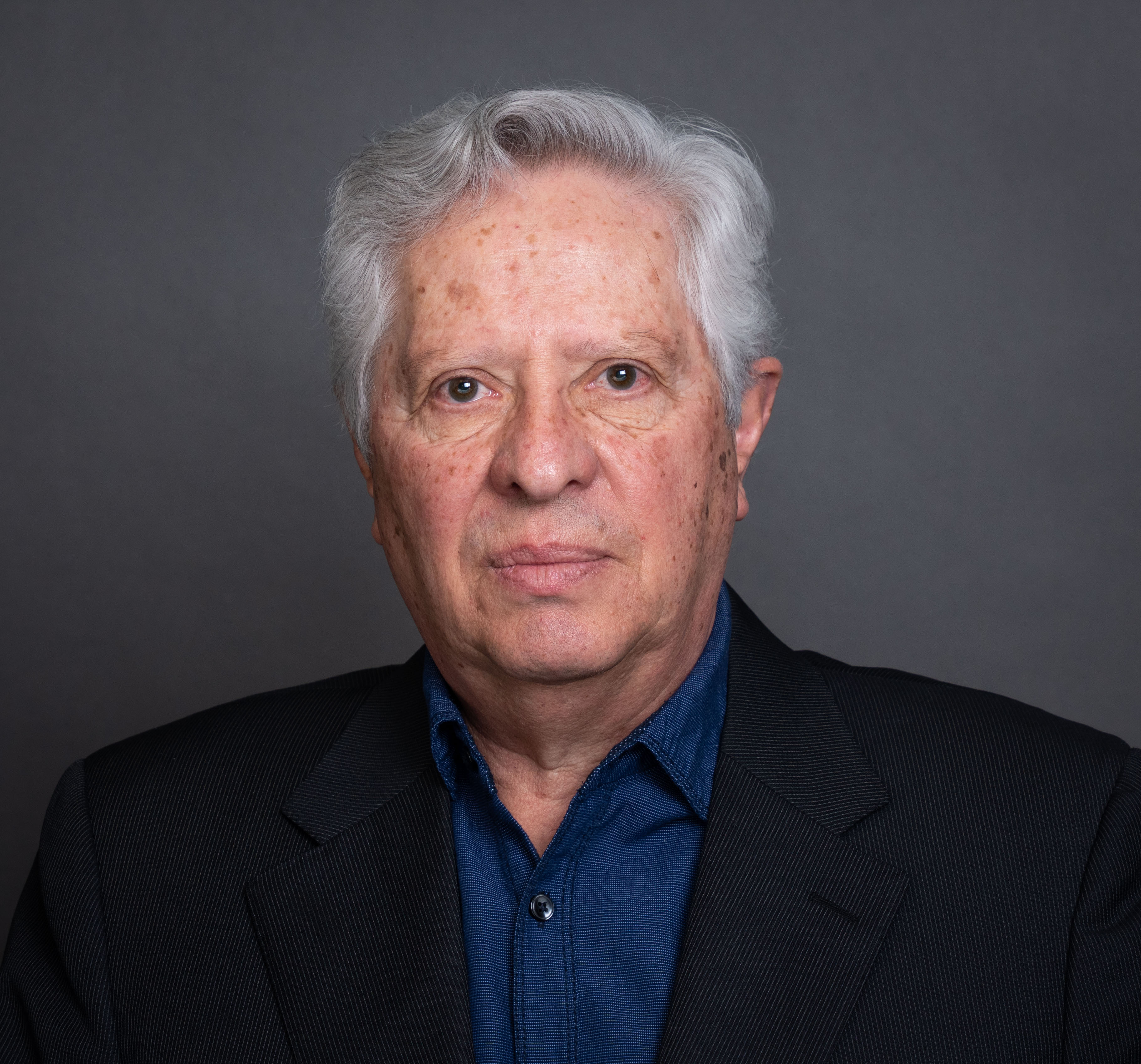
“Producing and distributing double fortified salt at large scale, in Ethiopia, by Ethiopian producers, with full support from the government and private industry, is a major step forward and a notable accomplishment for Nutrition International and its partners.
—Dr. Homero Martinez, Senior Technical Advisor, Large-Scale Food Fortification, Nutrition International
Like what?
Dr. Martinez: For starters, we had to see if we could replicate the findings from Canada. At the University of Toronto, they used a very pure, refined salt. Ethiopian salt is different, and conditions such as high temperatures, humidity and impurities presented additional challenges. We had to prove that adding folic acid to Ethiopian salt would work.
Another challenge was that when you add folic acid to white salt, the smell and taste don’t change, but the colour does, as folic acid has a slight yellow tint. Before we could start the main trial, we conducted a test with 500 Ethiopian mothers to see if they would accept the coloured salt. Acceptability to this product was very encouraging, allowing us to move ahead.
The initial feasibility trial showed that we could move from the laboratory setting to industrial production. I’m happy to report that folic acid remained stable for more than 10 months in the Ethiopian context, retaining 89-92% of folic acid and more than 94% of its iodine content.
We were then ready to begin the second phase to see if double-fortified salt could reduce folate deficiency associated with NTDs. In our six-month trial, no one rejected the salt because of the colour, and consumption was similar between those using double-fortified salt and those using iodized salt alone.
Why is Ethiopia prioritizing addressing neural tube defects?
Dr. Martinez: In 2017, a hospital-based study from the Tigray region of Ethiopia showed an exceptionally high rate of NTDs at 131 per every 10,000 births, with 77% of those being stillborn. It was just astounding. By comparison, countries with mandatory large-scale folic acid food fortification programs report rates of five to six NTDs per 10,000 births. . . . .
Dr. Godfrey Oakley, the then Director of the Centre for Spina Bifida Research and Prevention at Emory University, saw this study and was deeply concerned. He and Dr. Marinus Koning, a leading surgeon and founder of ReachAnother Foundation, discussed the problem and decided, “We have to do something about this. Let’s rally the troops.”
Nutrition International had just established the Folic Task Team to address these kinds of challenges, so they contacted me and asked if I would be willing to join. I said yes. I mean, that’s what we’re meant to do.
What happened then?
Dr. Martinez: Together, we reached out to other international colleagues. We got the attention of the Ethiopian Ministry of Health, which convened a national consultation. International groups like UNICEF and the International Federation for Spina Bifida and Hydrocephalus participated, alongside world-renowned experts from the USA, the UK, Canada and other countries.
We shared that one of the most effective ways to address this challenge is through large-scale food fortification, and that salt was likely the best vehicle for delivering folic acid supplementation in Ethiopia, given the limited reach of industrialized wheat flour.
“Mostly, I think about the potential to prevent NTDs in thousands of people around the world and to see this become possible through research and development leading to program implementation.
—Dr. Homero Martinez, Senior Technical Advisor, Large-Scale Food Fortification, Nutrition International
How was the clinical trial designed?
Dr. Martinez: It was a six-month, double-blind, placebo-controlled trial with 360 Ethiopian mothers in three different groups. One received salt fortified with a low dose of folic acid (to provide approximately 200mcg of folic acid per day), another received salt with a high dose (approximately 600 mcg of folic acid per day), and a control group received iodized salt without folic acid.
All three groups received salt iodized at the concentration approved by the government. Participants were provided with their assigned salt to use at home throughout the six-month trial, just as they normally would in their cooking.
What were the results of the trial?
Dr. Martinez: By the end of the trial, we found the prevalence of folate insufficiency in the low-dose group had decreased from 90% to just 19%. In the high-dose group, it was just 3%. These were clinically and statistically significant findings.
Importantly, no adverse effects attributable to the intervention were observed in any of the study groups. Acceptability of all three study salts was also very high and comparable across groups.
Were there any unexpected learnings from the study?
Dr. Martinez: Definitely. When we first established the Folate Task Team, someone pointed out that we had no representatives of people affected by spina bifida in our group. We hadn’t considered that because we were focused on the science.
We learned how important it is to include and centre those perspectives and voices. For example, study documents initially referred to “eliminating the suffering from spina bifida.” Then representatives shared: “Wait — I’m not suffering. I don’t want to be eliminated. You have to use different language.” It helped us be more respectful and inclusive in our work.
What are the next steps now the study is complete?
Dr. Martinez: There are three steps now.
First, we’ve received new funding to scale up production of double-fortified salt across the country. This involves upgrading production infrastructure at the central iodizing facilities to ensure folic acid is properly added to iodized salt, with government-led quality monitoring at all facilities to support a mandatory policy on double-fortified salt.
We’re also launching a pilot market introduction study. We want people to accept and consume the salt, so we need to understand how best to introduce it to the market and support its adoption through nutrition and health-related messaging.
Finally, we’ll establish a surveillance and monitoring system to track changes in salt consumption, population folate status, and morbidity and mortality associated with NTDs. This will include reporting at hospitals and the community level, as well as assessing potential savings for the healthcare system and reduced burdens on families.
Together, these efforts will help us understand the long-term impact on NTDs and allow the government to make any necessary adjustments to the program over the coming years.
How do you feel about what this research project accomplished?
Dr. Martinez: It’s very gratifying to see that efforts to reduce the burden of NTDs are leading to real change at the country level. Producing and distributing double fortified salt at large scale, in Ethiopia, by Ethiopian producers, with full support from the government and private industry, is a major step forward and a notable accomplishment for Nutrition International and its partners.
I think about the many people who made this happen — especially Dr. Koning, who passed in 2023, and Dr. Oakley, who passed in October 2025 — and their commitment to improving peoples’ lives. I also think about the many partners who have committed their time, effort and expertise to this joint endeavour, including colleagues from EPHI, Nutrition International, ReachAnother Foundation, HOPE-SBH, Gates Foundation and researchers from the University of California, Davis, the University of California, San Francisco, and the University of Toronto.
But mostly, I think about the potential to prevent NTDs in thousands of people around the world, and to see this become possible through research and development leading to program implementation. It’s amazing and exciting, and opens up so many possibilities to build on these results.
Discover the research findings here.


Related News