News
African leaders to the world: Our children cannot wait
September 24, 2026

WP_Term Object
(
    [term_id] => 2025
    [name] => Stories
    [slug] => all-stories
    [term_group] => 0
    [term_taxonomy_id] => 2025
    [taxonomy] => news-category
    [description] => Discover the personal stories of people whose lives have been impacted by better nutrition, and those working tirelessly to deliver it, and what’s top of mind for our technical experts as they share the latest on cutting-edge nutrition research, policy updates, and implementation guidance.
    [parent] => 0
    [count] => 363
    [filter] => raw
)


Bringing lifesaving diarrhea care closer to home in Balochistan
In remote districts of Pakistan, family health outlets are helping communities access timely treatment for childhood diarrhea with zinc and low-osmolarity oral rehydration salts (LO-ORS). Building on Nutrition International's longstanding work to improve diarrhea treatment and child survival, the outlets are expanding access to care in some of Pakistan's hardest-to-reach areas.
Posted on July 22, 2026
The family health outlet in Kili Garda Babar has become a central point for accessing information and timely treatment of diarrhea.
In Kili Garda Babar, a village located in the rugged district of Zhob, Balochistan in Pakistan, geography and infrastructure have long limited access to healthcare for families. Flood-damaged roads, high transport costs, and few nearby health facilities have made it difficult to access care when it is needed most. For children, this means preventable illness can too often escalate into a life-threatening condition when treatment is delayed.
Diarrhea remains a significant threat across the province, affecting 18.5% of children under five, according to Pakistan’s National Nutrition Survey 2018. A 2020 UNICEF situational analysis found that approximately 8% of child deaths in Pakistan are linked to diarrhea-related illness.
Through the Zinc Alliance for Child Health, Nutrition International has worked alongside governments in Africa and Asia to improve access to proven treatments for childhood diarrhea, prioritizing access to zinc and LO-ORS. With support from Teck Resources and the Government of Canada, that investment in seeing a return in more equitable access and stronger systems. In Pakistan, that work is now being strengthened through family health outlets, bringing treatment and counselling closer to families in underserved communities.
For Gul Bibi, a trained midwife and lady health worker in Kili Garda Babar, the need for accessible care was clear. As both a healthcare provider and a member of the community, she had seen the barriers families faced when seeking care for their children.
Building local access
In 2024, Bibi attended a community mobilization meeting organized by the Balochistan Rural Support Program (BRSP). She later participated in training designed to strengthen community-based, integrated health and nutrition services in resource-constrained settings. Organized by BRSP in partnership with Nutrition International and the Pakistan Poverty Alleviation Fund (PPAF), the training focused on practical approaches to improve prevention, treatment and referral services at the community level.
“They feel comfortable coming to me to speak because they know my outlet and that I am here for them.
— Gul Bibi, Midwife and Health Worker
Building on her existing skills, Bibi gained access to additional tools, resources and support to expand the services she could offer. She went on to establish a family health outlet in her community, creating a nearby source of care for families who previously faced long journeys or uncertainty about where to seek treatment.
It was here that a new way of providing accessible, lifesaving care began to take shape.
“Before the intervention, I had the necessary training but nothing else — no resources, no medicines, no trust from the community,” Bibi says. “Now, I treat seven to eight patients every day, many of them children, through this family health outlet. People come to this centre as they know that they will receive proper care at a nominal cost close to their homes.”
Bibi is part of a cohort of community health providers trained to strengthen access to integrated health and nutrition services in their communities. Nutrition International and PPAF have supported the establishment of 15 family health outlets across three districts — two in Balochistan and one in Khyber Pakhtunkhwa. Today, these outlets serve as critical touchpoints for care within their communities, demonstrating how community-based, integrated approaches can advance child survival in underserved areas.
A trusted pointed of care
The family health outlets go beyond treatment to also focus on prevention. While the outlets provide frontline support for childhood diarrhea, including zinc and LO-ORS, they also offer counselling on nutrition, hygiene and other essential health practices that help families prevent illness before it begins.
“I counsel the women in my family health outlet, in their homes and even after prayers, on what to do when their child has diarrhea, or how to feed their babies properly. I guide them based on my training,” shares Bibi. “They feel comfortable coming to me to speak because they know my outlet and that I am here for them.”
“Nutrition International’s grassroots health and nutrition interventions have made a real difference in improving health outcomes in some of the province’s hardest-to-reach areas.
— Dr. Shokat Baloch, Additional Director General of Health, Balochistan
Bibi has stocked her outlet with essential medicines, weighing scales, referral registers and educational materials. She has also expanded her work beyond childhood diarrhea management to support mothers with immunization, exclusive breastfeeding, complementary feeding, early childhood development, healthy timing and spacing of pregnancies, and nutrition and hygiene education.
Through these daily interactions, Bibi has become a reliable source of information and support for families in her community. Since opening her outlet, she has treated more than 1,600 diarrhea cases. Nutrition International’s support to family health outlets across Balochistan and Khyber Pakhtunkhwa has helped reach approximately 45,000 children, increasing access to zinc and LO-ORS to treat close to 13,000 diarrhea cases.
Integration and continued support
Family health outlets are designed to complement existing government health services. Severe cases of diarrhea or dysentery are referred to nearby government health facilities, helping strengthen links between communities and the broader health system.
Shehnaz, a lady health visitor from an associated basic health unit, said she has seen an increase in the number of people seeking services as community awareness and access to care improved.
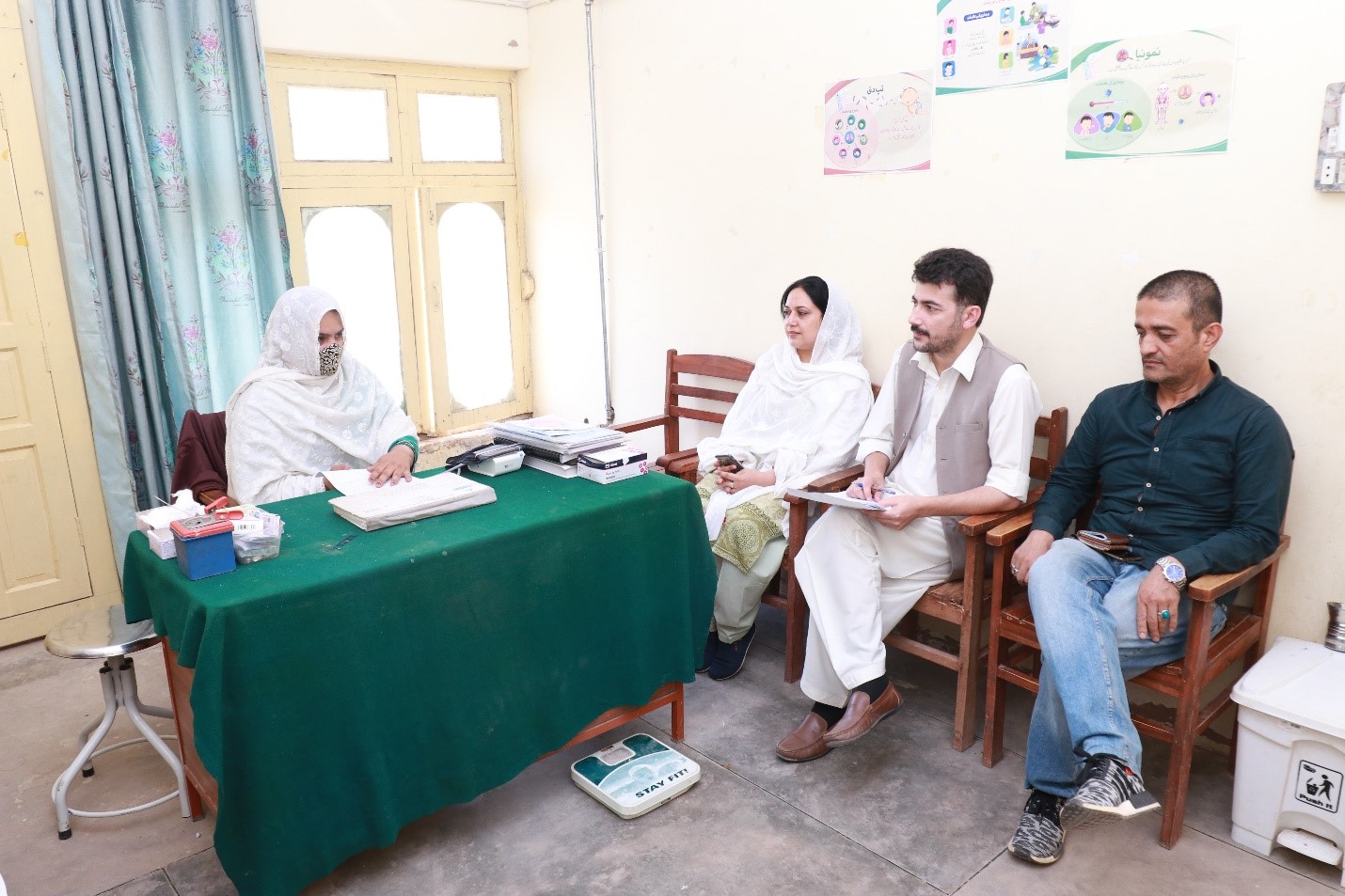
“Our basic health unit was often empty,” Shehnaz says. “But after support arrived, medicines came, trainings took place, and people gradually began to visit. Just today, I examined three children with diarrhea and shared zinc and LO-ORS for their treatment. In case of any emergency or serious illness related to women and children’s health, Gul Bibi refers cases to health facilities for treatment.”
For Aisha, a mother in Kili Garda Babar, access to timely care is deeply personal. After losing a child to severe diarrhea, she knows how quickly an illness can become life-threatening when treatment is out of reach. Today, she says the family health outlet is helping families like hers access care closer to home, making it easier to seek treatment early when children become ill.
“My son recovered from diarrhea as we were able to get the zinc and LO-ORS from the family health outlet in time,” Aisha shared. “Gul Bibi’s training and the awareness has changed everything for us.”
Provincial leadership has also recognized the value of this model.
“Nutrition International’s grassroots health and nutrition interventions have made a real difference in improving health outcomes in some of the province’s hardest-to-reach areas. Their work with Balochistan Rural Support Program and community health providers has filled a critical gap,” says Dr. Shokat Baloch, Additional Director General of Health in Balochistan. “Indeed, we are eager to continue working with Nutrition International to further strengthen and expand these efforts.”
In a province where under-five mortality remains high, family health outlets are helping bring proven diarrhea treatment closer to home. By making zinc and LO-ORS more accessible and pairing treatment with counselling and referral services, the outlets are helping families access timely care while strengthening community-based health systems. Training of healthcare providers and the establishment of family health outlets have helped close gaps in care for last-mile communities through an integrated, community-led approach, improving access to prevention services and timely treatment.
“This outlet has allowed me to put my skills to use for my community,” says Bibi. “Mothers trust me now. They come because they know they’ll receive the right treatment — and that someone really cares.”
Learn more about our work in Pakistan.


Related News