News
African Union and Nutrition International strengthen partnership to accelerate nutrition security across Africa
March 4, 2026

WP_Term Object
(
    [term_id] => 2025
    [name] => Stories
    [slug] => all-stories
    [term_group] => 0
    [term_taxonomy_id] => 2025
    [taxonomy] => news-category
    [description] => Discover the personal stories of people whose lives have been impacted by better nutrition, and those working tirelessly to deliver it, and what’s top of mind for our technical experts as they share the latest on cutting-edge nutrition research, policy updates, and implementation guidance.
    [parent] => 0
    [count] => 363
    [filter] => raw
)


Advancing Africa’s nutrition agenda
Explore seven ways the first memorandum of understanding between the African Union and Nutrition International advanced regional action on nutrition across the continent.
Posted on May 22, 2026
Across Africa, nutrition is rising on the political agenda, driven by African leadership, continental strategies and a growing recognition that human capital will shape the continent’s future. The urgency is clear: the triple burden of malnutrition—undernutrition, micronutrient deficiencies, and rising obesity—continues to undermine health, constrain economic potential and claim lives. Progress on under-five mortality is slowing and, for the first time this century, is projected to rise. At the same time, Africa remains the world’s youngest region, with a rapidly growing youth population that places renewed focus on the systems needed to support healthier, more productive futures.
In response, the African Union (AU) has advanced a more coordinated and ambitious nutrition agenda. A key milestone in this effort was the three-year memorandum of understanding (MoU) with Nutrition International signed in 2022, the AU Year of Nutrition. The partnership helped strengthen continental advocacy, support regional frameworks and elevate nutrition within broader discussions on governance, development and economic resilience.
As the second MoU gets underway, we’re reflecting on seven ways the partnership helped advance Africa’s nutrition agenda.
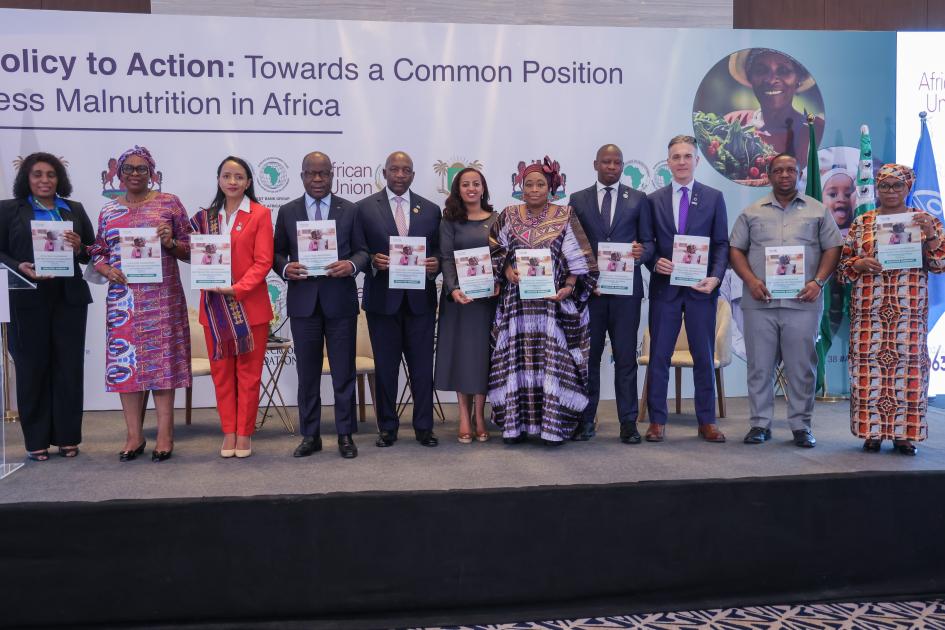
Anaemia remains one of Africa’s most persistent nutrition challenges, disproportionately affecting women, and impacting the health, education and economic prosperity across generations.
A major milestone was the Strategic Framework for Prevention and Management of Anaemia in Africa adopted at the 38th Ordinary Session of the Assembly of AU Heads of State and Government in February 2025, and launched during a high-level side event on the margins of the AU Summit. It establishes a shared ambition to reduce anaemia prevalence by 50% by 2035 and outlines coordinated action across health, food systems, education and social protection.
Nutrition International supported this process through its engagement with the World Health Organization, contributing technical inputs and evidence to strengthen the framework’s design.
Adolescent nutrition moved firmly into the policy spotlight, reflecting its importance to Africa’s demographic future.
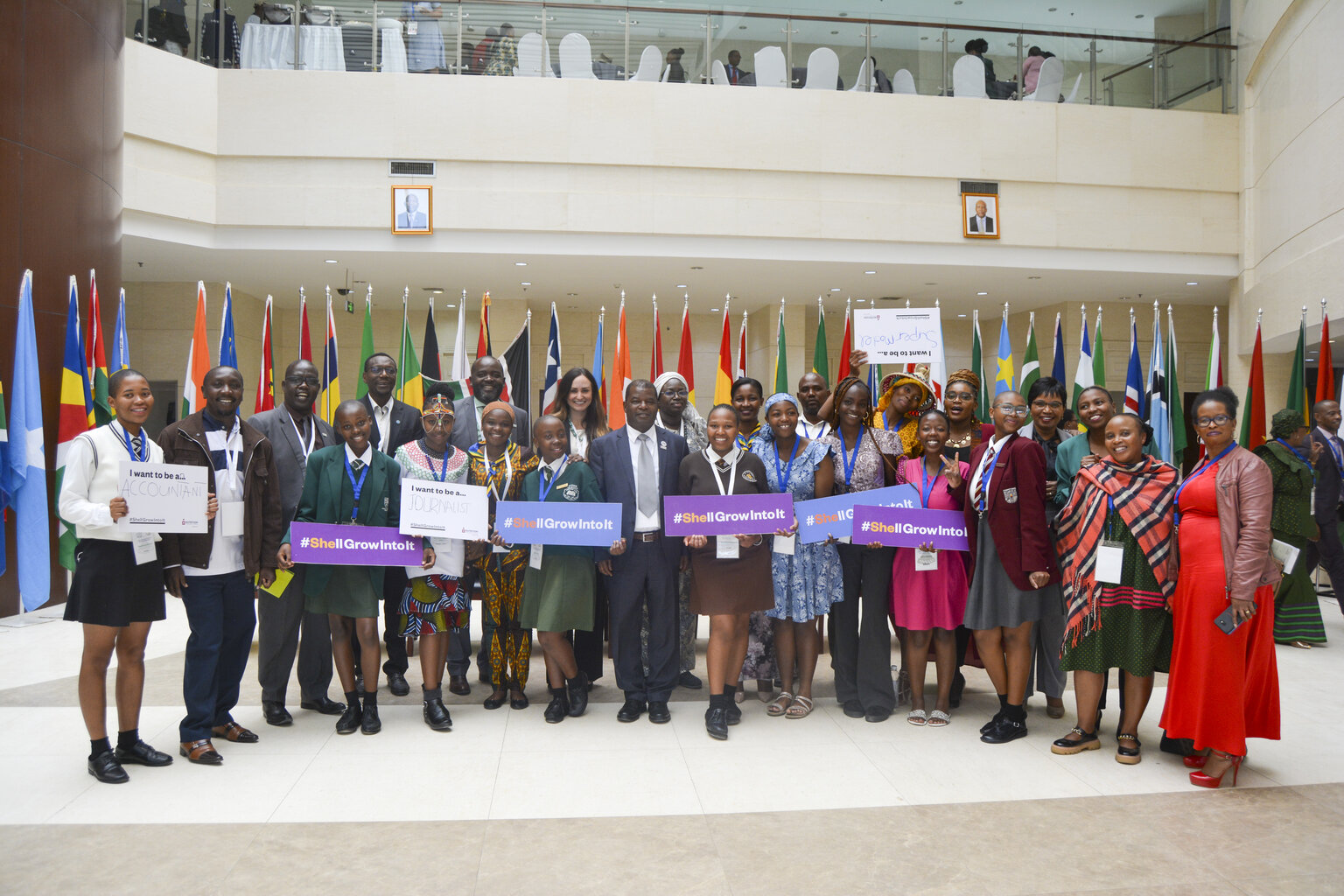
At the regional level, the East, Central and Southern Africa Health Community (ECSA-HC) launched the to formalize coordinated action across member states. The strategy, developed during the 2022 AU Year of Nutrition, addresses anaemia, undernutrition, and rising overweight and obesity among adolescents while reinforcing the need for integrated approaches across health and education systems.
At the continental level, the With Good Nutrition, She’ll Grow Into It campaign translated this focus into public-facing advocacy, positioning adolescent girls beyond a vulnerable target group to being at the centre of Africa’s human capital and economic future.
3) Strengthening the Africa Regional Nutrition Strategy as a backbone for action
The Africa Regional Nutrition Strategy (ARNS) 2015-2025 has long served as the AU’s core framework for addressing malnutrition in all its forms, aligning nutrition policies with Agenda 2063, the Africa Health Strategy and the Malabo Declaration. It has helped structure multisector action across the continent, reinforcing nutrition governance and supporting increased domestic investment.
Nutrition International helped advance implementation capacity for the ARNS through advisory inputs and technical support. Building on this, Nutrition International is serving as technical lead on the development of the next ARNS, supporting stronger integration of adolescent nutrition alongside broader priorities on advocacy, accountability and cross-sector action.
The African Union Media Fellowship was established to strengthen continental reporting on development priorities and Agenda 2063.
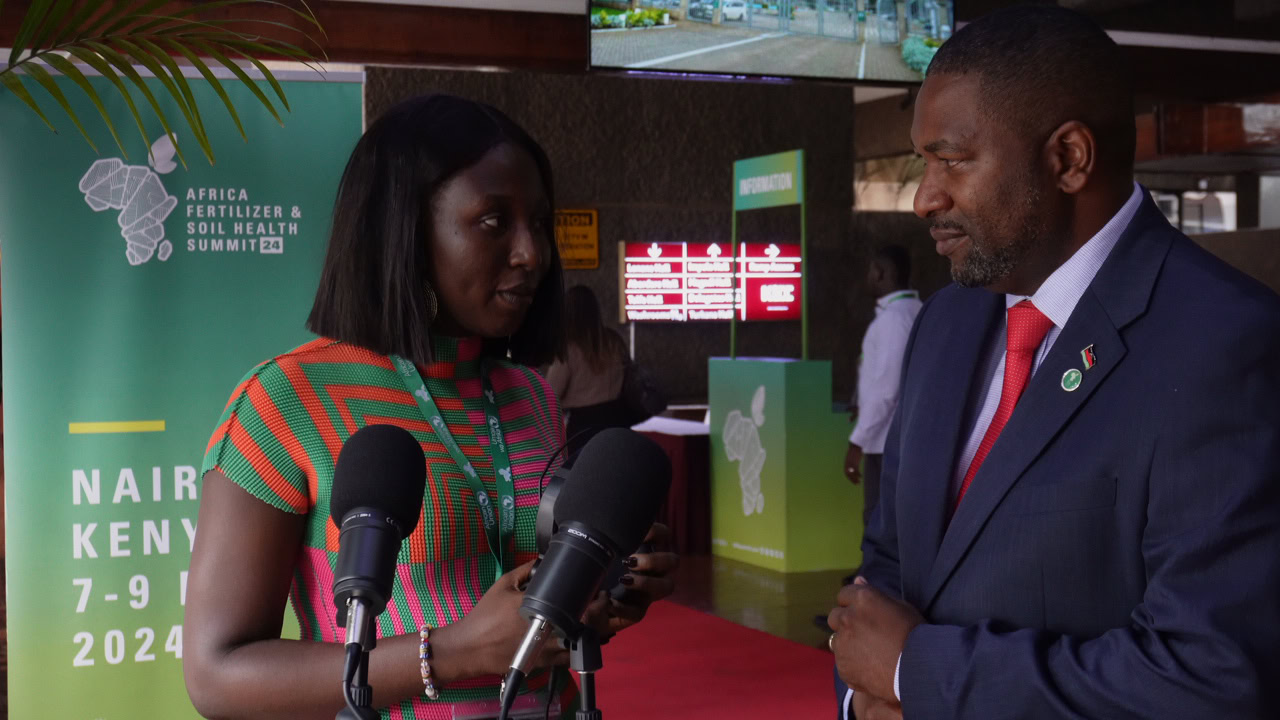
In 2024, a dedicated focus on adolescent nutrition supported reporting that connected nutrition to education, gender equality and economic opportunity. Five journalists from the five regional economic communities of the AU spent the year documenting what this looks like in the real world.
Stories explored how gendered feeding inequalities shape nutrition outcomes for adolescent girls, whether nutrition education in schools could serve as a catalyst for better adolescent health outcomes, and much more.
As Africa’s development priorities continue to evolve, there is growing momentum behind partnerships that support African-led approaches to nutrition, health, education and economic growth.
Alongside Canada’s high-level dialogues with the AU, Nutrition International convened government representatives, civil society leaders and development partners to reflect on 70 years of Canada-Africa collaboration — and to explore how Canada’s expertise and investments can better support Africa’s long-term priorities and growing human capital agenda. These discussions reinforced the growing importance of long-term collaboration around human capital development, nutrition financing, heath systems and youth wellbeing, while supporting stronger alignment between African priorities and international partnership efforts.
Responding to African priorities with Canadian strengths
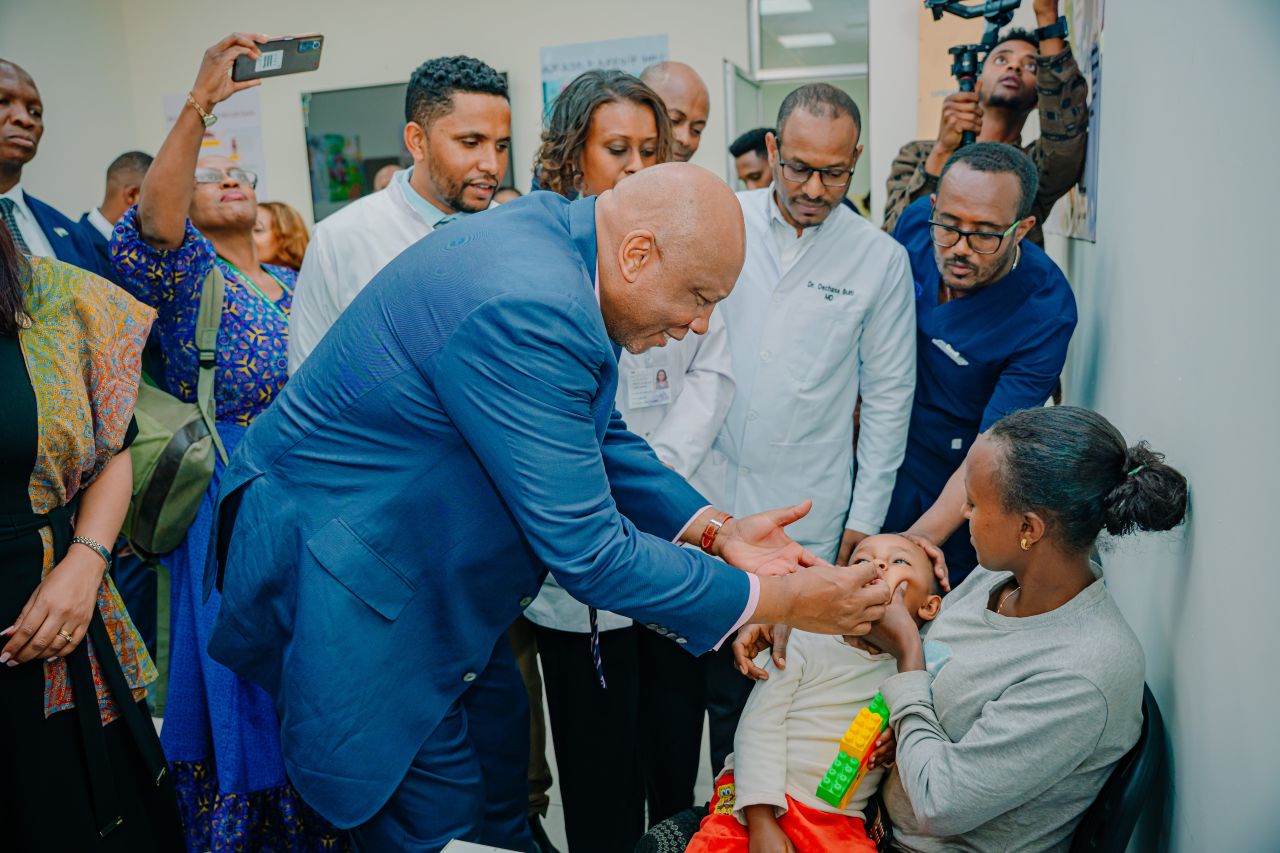
His Majesty King Letsie III of Lesotho, the AU Nutrition Champion, continued to play a central role in elevating nutrition and child survival within continental political dialogue, framing nutrition as a foundation for human capital and long-term prosperity.
At the 39th African Union Summit in February 2026, His Majesty co-hosted a high-level side event to accelerate action on malnutrition and child survival. He continuously advocates for nutrition, including issuing a public call for urgent presidential leadership to address preventable child deaths and malnutrition in a recently published opinion piece, emphasizing the importance of political commitment at the highest levels of government.
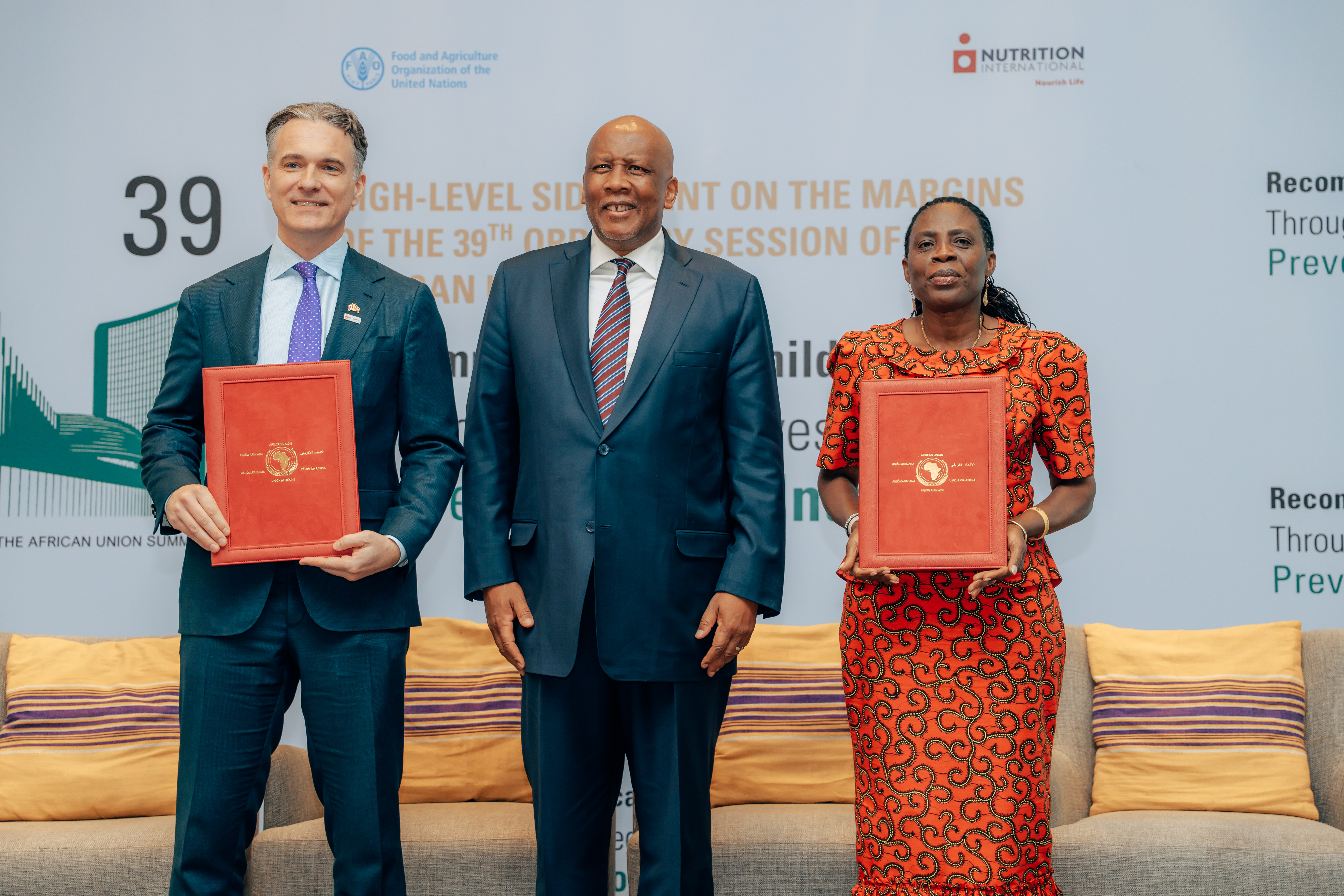
In 2026, the AU and Nutrition International signed a second MoU, building on the systems, partnerships and policy foundations developed during the first.
The renewed agreement reflects both continuity and evolution in the AU’s nutrition agenda. Many of the priorities advanced between 2022 and 2025—including anaemia prevention, adolescent nutrition, nutrition governance, advocacy, accountability and stronger multisector coordination—will continue under the next phase of collaboration, alongside an expanded focus on child survival and implementation at scale.
As the next phase begins, the focus shifts toward delivery and turning established commitments into measurable improvements in nutrition outcomes. As nutrition gains stronger political visibility across Africa, growing attention is being placed on implementation systems, institutional coordination, financing and the accountability mechanism needed to translate commitments into sustained progress.
As the next chapter begins, Nutrition International remains committed to supporting AU-led priorities and working alongside regional and national partners to help translate political commitment into action.
Learn more about Nutrition International’s work in Africa.


Related News