Stories
Expanding women’s leadership in local health systems
March 9, 2026

WP_Term Object
(
    [term_id] => 2025
    [name] => Stories
    [slug] => all-stories
    [term_group] => 0
    [term_taxonomy_id] => 2025
    [taxonomy] => news-category
    [description] => Discover the personal stories of people whose lives have been impacted by better nutrition, and those working tirelessly to deliver it, and what’s top of mind for our technical experts as they share the latest on cutting-edge nutrition research, policy updates, and implementation guidance.
    [parent] => 0
    [count] => 347
    [filter] => raw
)


Engaging men in health and household decision-making
In Senegal’s Kaffrine region, the School of Husbands approach is shifting norms around masculinity, shared responsibility and family health.
Posted on March 9, 2026
Husband and wife, Abdoulaye and Fatou, participate in group discussions that challenge gender stereotypes and strengthen communication skills.
In Maabo, a town in Kaffrine, Senegal, Abdoulaye Diallo is a well-known man. A municipal councillor, often called upon to settle disputes or represent the town at official meetings, he embodies local authority. Hardworking, committed and a family man, Abdoulaye saw himself as an accomplished, responsible and respected person.
But behind this public image lay a more complicated reality.
At home, conversations with his wife, Fatou Seck, often slipped into disagreements. Misunderstandings grew, as did fatigue on both sides. Fatou carried most domestic and family responsibilities, while Abdoulaye, absorbed in his work and civic commitments, felt he contributed by ensuring the household’s material needs were met.
For him, managing the household was his wife’s responsibility and part of a division of roles he hadn’t previously questioned. Issues like reproductive health, nutrition and children’s care seemed distant from the demands of public life.
The School of Husbands (Écoles des Maris) was introduced to Maabo as part of the Integrated Nutrition and Gender Project in Senegal (PINGS), implemented by Nutrition International and its partners with support from the Government of Canada.
When approached about the idea, Abdoulaye was initially reluctant.
“Me, sit down and learn how to talk to my wife?” he said with skepticism. He saw these meetings as a challenge to his authority and social status.
But around him, men he respected agreed to participate. Health workers, community leaders, ordinary fathers. Out of curiosity, more than out of conviction, Abdoulaye ended up attending his first discussion session, with no real intention of getting involved.
That day, something changed.
He didn’t hear lectures. He heard testimonies. Men talking about their frustrations, their arguments, their struggle to listen. He recognized his own reactions in the stories of others. For the first time, he understood that anger was not a sign of strength, but often an admission of weakness.
Discussions about nutrition and reproductive health broadened his perspective. He realized that prenatal consultations, healthcare expenses, and a balanced diet were not exclusively women’s responsibilities, but shared responsibilities. Discussions about positive masculinity were decisive: they showed him that a respected man is above all a man capable of questioning himself.
Abdoulaye decided to join the School of Husbands wholeheartedly.
The five-day training course marked a turning point. He learned to spot signs of tension, control his emotions, and invite dialogue. The sessions on communication within couples really hit home for him. He realized that talking without yelling, listening without judging, and making decisions together didn’t take away from his authority; but rather strengthened being a couple.
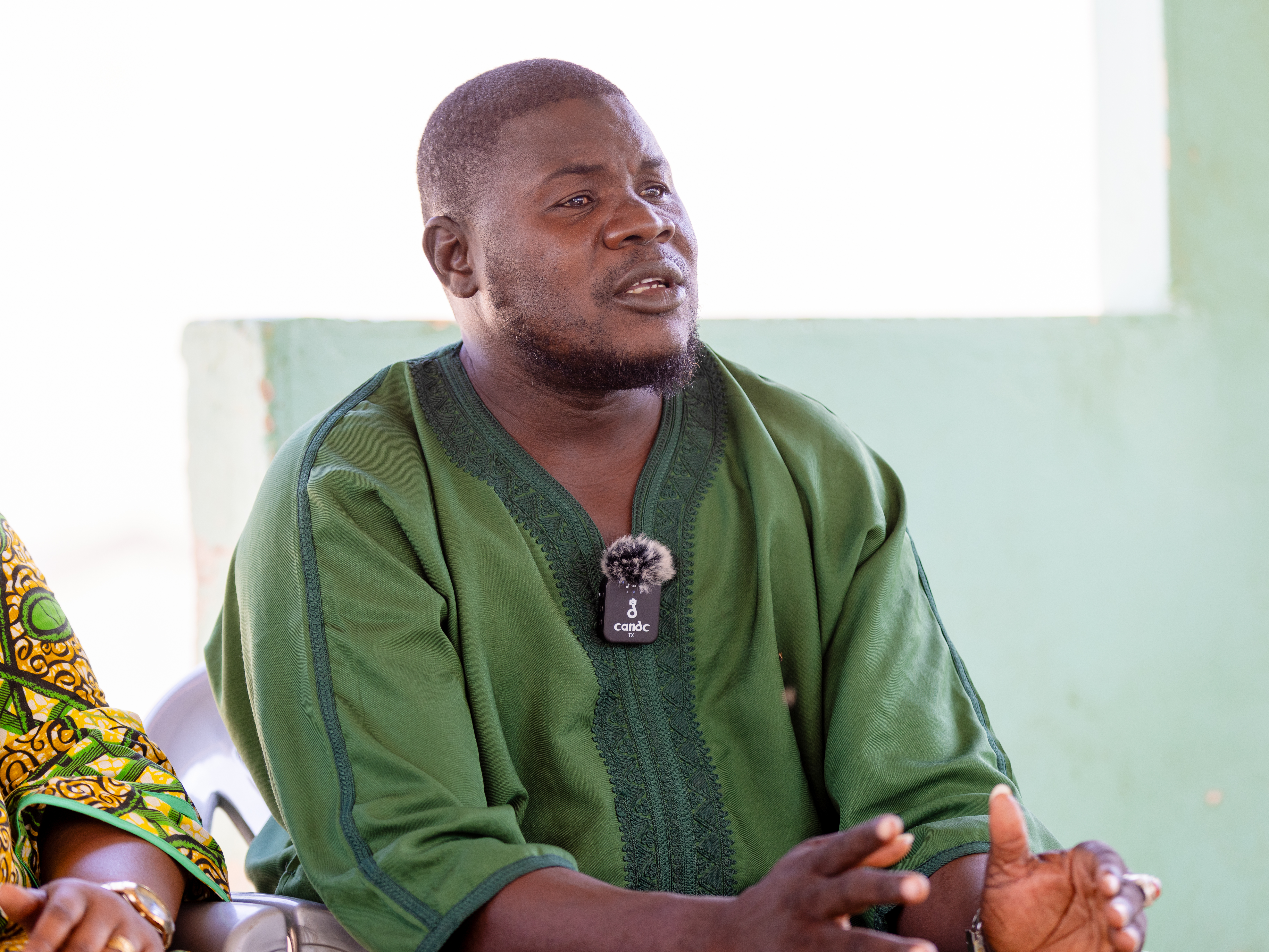
One example of Abdoulaye’s changed mindset took place during an evening after a particularly tough day. He found himself sitting down with Fatou to talk calmly. He let her speak until she was done. He listened to her fatigue, her worries, her expectations, without interruption. For Fatou, this moment marked a significant shift.
Abdoulaye began accompanying his wife to the health centre, helping with some household duties, and taking a more active role in his children’s education.
The household became calmer. The children noticed the change. So did Fatou. The home became a place of dialogue rather than confrontation. “The day Abdoulaye sat down to listen to me without getting angry, I realized that something had really changed. I didn’t recognize the man who was talking to me: he was calm, attentive, present. He was no longer just my husband, he had become my partner,” says Fatou.
Strengthened by this transformation, Abdoulaye became one of the most respected peer husbands in Maabo. His status as an elected representative, combined with his personal experience, gives him special legitimacy. During the discussion sessions, he speaks without lecturing. He talks about his own journey, his mistakes, and his anger in the past.
“If I, with my character, was able to change, then any man can do it,” he likes to repeat.
Together with other members of the School of Husbands, he hosts tea discussion sessions, conducts home visits, and participates in the implementation of community action plans. He uses simple, respectful language rooted in local realities, exactly as promoted by the School of Husbands approach.
The results of the PINGS project’s mid-term evaluation show a significant improvement in men’s attitudes and behaviours with regard to sharing domestic responsibilities, communication within couples, and involvement in family health.
In Kaffrine, the commitment of local authorities, including municipal councillors such as Abdoulaye, has made it possible to go even further. The institutionalization of Schools of Husbands through municipal decrees supports the sustainability of this approach beyond the project helps to embed it within community dynamics.
Today, Abdoulaye says calmly and with conviction: “Being a respected man in the community starts with being a fair man in your own home.”
In Maabo, his story inspires other men. And through it, an entire community is learning that by transforming relationships within the household, we can bring about long-lasting change in society.
Learn more about our work in Senegal.


Related News