Stories
10 stories that shaped our work in global nutrition this year
December 19, 2025

WP_Term Object
(
    [term_id] => 2025
    [name] => Stories
    [slug] => all-stories
    [term_group] => 0
    [term_taxonomy_id] => 2025
    [taxonomy] => news-category
    [description] => Discover the personal stories of people whose lives have been impacted by better nutrition, and those working tirelessly to deliver it, and what’s top of mind for our technical experts as they share the latest on cutting-edge nutrition research, policy updates, and implementation guidance.
    [parent] => 0
    [count] => 347
    [filter] => raw
)


Hilda’s journey: Becoming a business leader and peer educator
The Building Rights for Improved Girls’ Health in Tanzania (BRIGHT) project weaves together access to improved nutrition, life skills and sexual reproductive health (SRH) with practical entrepreneurship skills to increase the health, wellbeing and decision-making power of adolescent girls overall. This is Hilda’s story.
Posted on December 16, 2025
Youth participants in the BRIGHT project, Tabora, Tanzania.
Hilda is no stranger to hard work. But she needed the right opportunity to propel her forward.
“I had big dreams to attain financial stability and contribute positively to my community,” shares the 20-year-old, reflecting on her experience with the Building Rights for Improved Girls Health in Tanzania (BRIGHT) project. She first got involved two years ago when she joined a girls’ peer group led by Tausi, a BRIGHT-trained peer educator.
At the time, Hilda was working as an informal street vendor, preparing and selling food near a local mining area for day labourers. Growing up in Zogolo ward in Nzega Town Council in Tabora, Tanzania, she was the youngest of three children to small-scale farmers who sold maize and other staple crops to sustain the household. In 2021, Hilda completed secondary school and wanted to further her education to become a nurse. However, like her siblings, she was unable to continue with college due to financial constraints.
Using the entrepreneurial spirit and work ethic she learned from her parents, she looked around for an opportunity to start making a living. Each day, she carried porridge and milk to a nearby mining area. Although the work was physically demanding and often emotionally draining, she earned just TSH 3,000 to 5,000 (approx. CAD $1.70 to $2.85) on a good day. It offered little stability and exposed her to unpredictable and long hours under the sun, carrying heavy loads and often returning home with unsold food. With minimal business knowledge and no formal livelihood support, Hilda struggled to achieve the financial independence she desired.
That started to change when she joined the girls’ group with BRIGHT.
With her group of 25 peer adolescent girls, she began building her knowledge of pricing and business planning, along with participating in sessions on nutrition and sexual and reproductive health (SRH), giving her vital information she was unlikely to have access to otherwise.
Motivated by what she was learning and determined to improve her situation, she applied to become a BRIGHT peer educator herself and take on more of a leadership role. She was selected and went on to attend six days of intensive training in life skills, SRH and nutrition.
“These sessions helped me discover my potential, take charge of my own life and build a clear direction for my future.
— Hilda, BRIGHT peer educator
“For the first time, I learned about budgeting, saving, family planning, adolescent rights and nutrition,” she recalls. “These sessions helped me discover my potential, take charge of my own life and build a clear direction for my future.”
In partnership with the Government of Tanzania and EngenderHealth, and with funding from the Government of Canada, the BRIGHT project tackles existing structural, social and systemic barriers that prevent adolescents, especially girls in Tabora, from exercising their SRH and nutrition rights, and addresses issues related to suboptimal nutrition status, gender-based violence, early marriages and pregnancies.
In Tabora, the largest and one of the most remote regions of Tanzania, 25% of the population is made up of adolescents. Yet, the area lags behind on nearly all key SRH and nutrition indicators, with adolescent pregnancy at a concerning 29%, early marriage affecting 58% of girls, and gender-based violence at an alarming 71%, the third highest rate in the country.
“Against this backdrop, the BRIGHT project is not just about improving health indicators, it is about transforming lives,” shares Florian Fanuel, Project Director. “By equipping girls like Hilda with the tools, knowledge, and support they need to thrive, BRIGHT tackles teenage pregnancy, early marriage, and gender-based violence head-on, building a future where adolescent girls in Tabora can grow with dignity, equality and opportunity.”
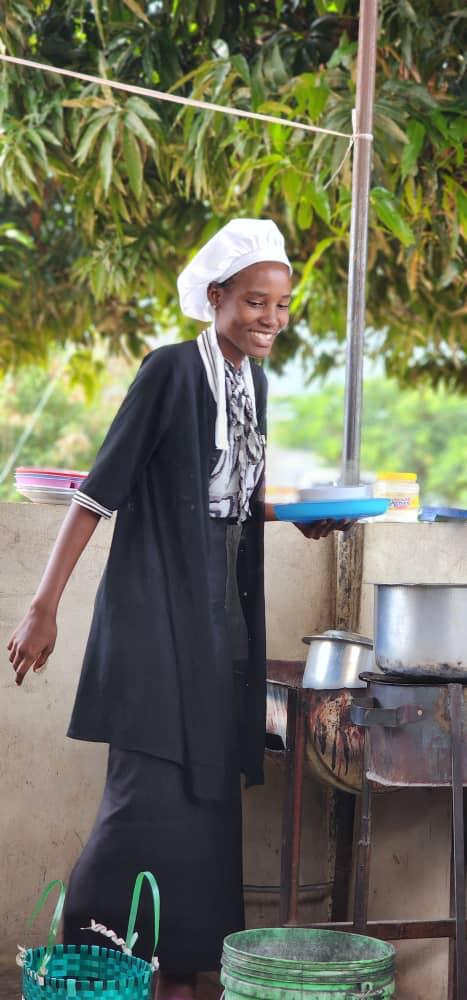
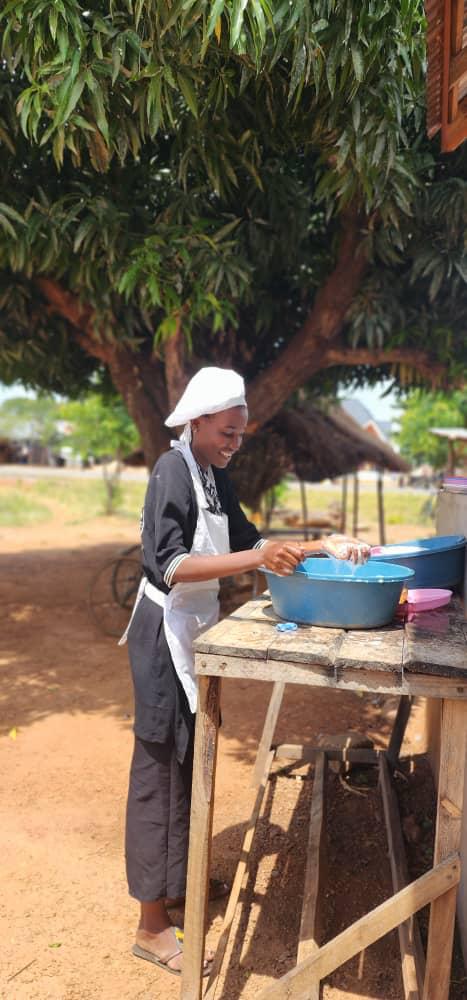
Hilda saved the stipends she received for participating in the training and used them to open a small food restaurant, marking her transition from informal street vending to becoming a structured business owner. With her new skills, she developed her menu, improved hygiene standards in her restaurant, and marketed her services more effectively. Hilda’s business has grown rapidly. She employs two people, including a fellow female youth she mentors. In addition, she joined a savings group to help manage and grow her income. Financial independence has enabled her to support her household and become a respected figure in her community.
“The BRIGHT project is not just about improving health indicators, it is about transforming lives.
— Florian Fanuel, Project Director, BRIGHT
“Now, I earn enough money to support my daily needs. I can afford clothing, food and small household expenses. This has helped me become independent, no longer relying on my parents or the community around me,” says Hilda.
Beyond her business, Hilda has formed three adolescent groups, two for girls and one for boys, where she facilitates sessions on SRH, life skills, nutrition and selfcare. In total, 60 adolescents in her community attend. Due to her efforts, more adolescents now have access to family planning, HIV testing, and nutrition assessments. One 17-year-old girl from her group decided to postpone early marriage after learning about its risks during a session.
“The BRIGHT project did not just help me economically; it also changed how I take care of my health,” Hilda says. “I now practice good nutrition and understand the importance of protecting myself from risky behaviours. I know that self-awareness is one of the strongest tools I have.” Her transformation has inspired many people in her village, and her confidence, financial independence and leadership are shifting how people perceive adolescent girls and their potential.
Her success demonstrates how BRIGHT is not only transforming individual lives but also reshaping social norms around gender, adolescent wellbeing and supporting girls’ empowerment.
Learn more about our work in Tanzania.


Related News