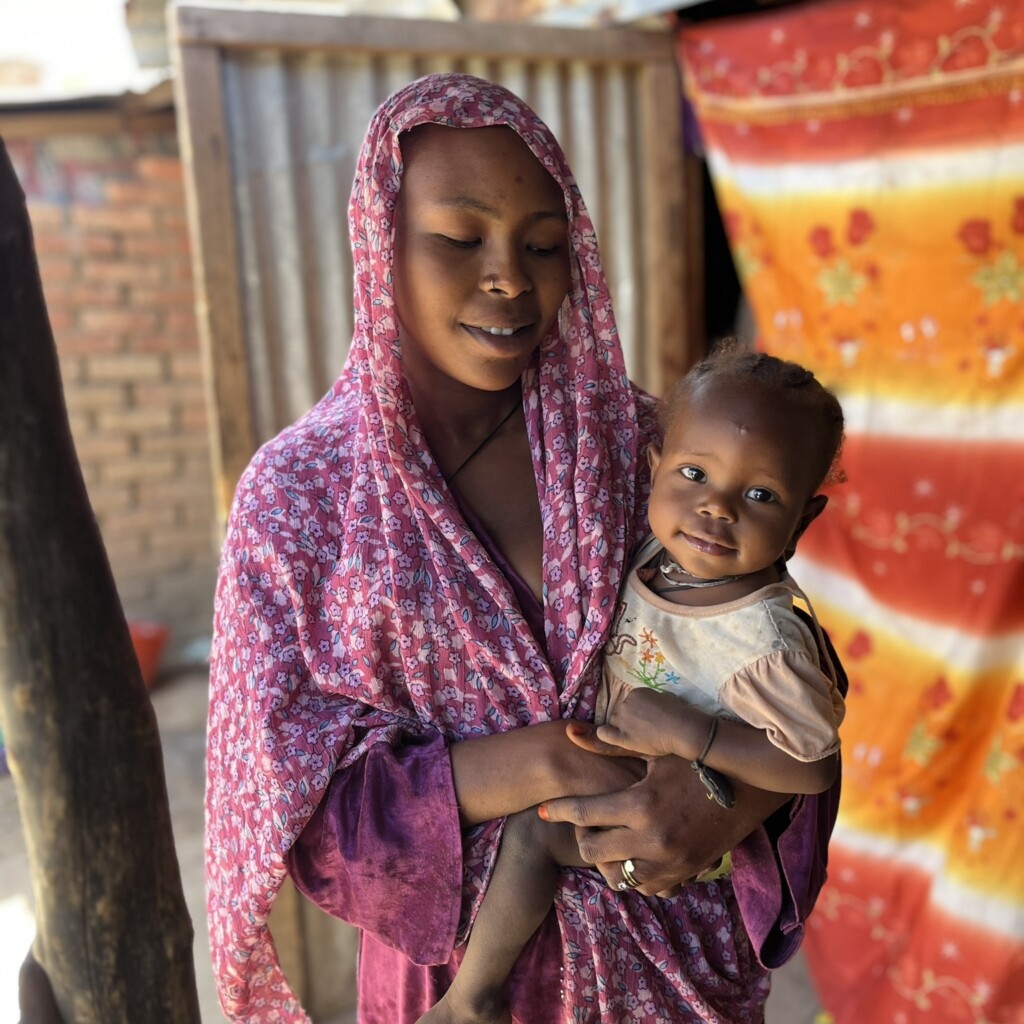
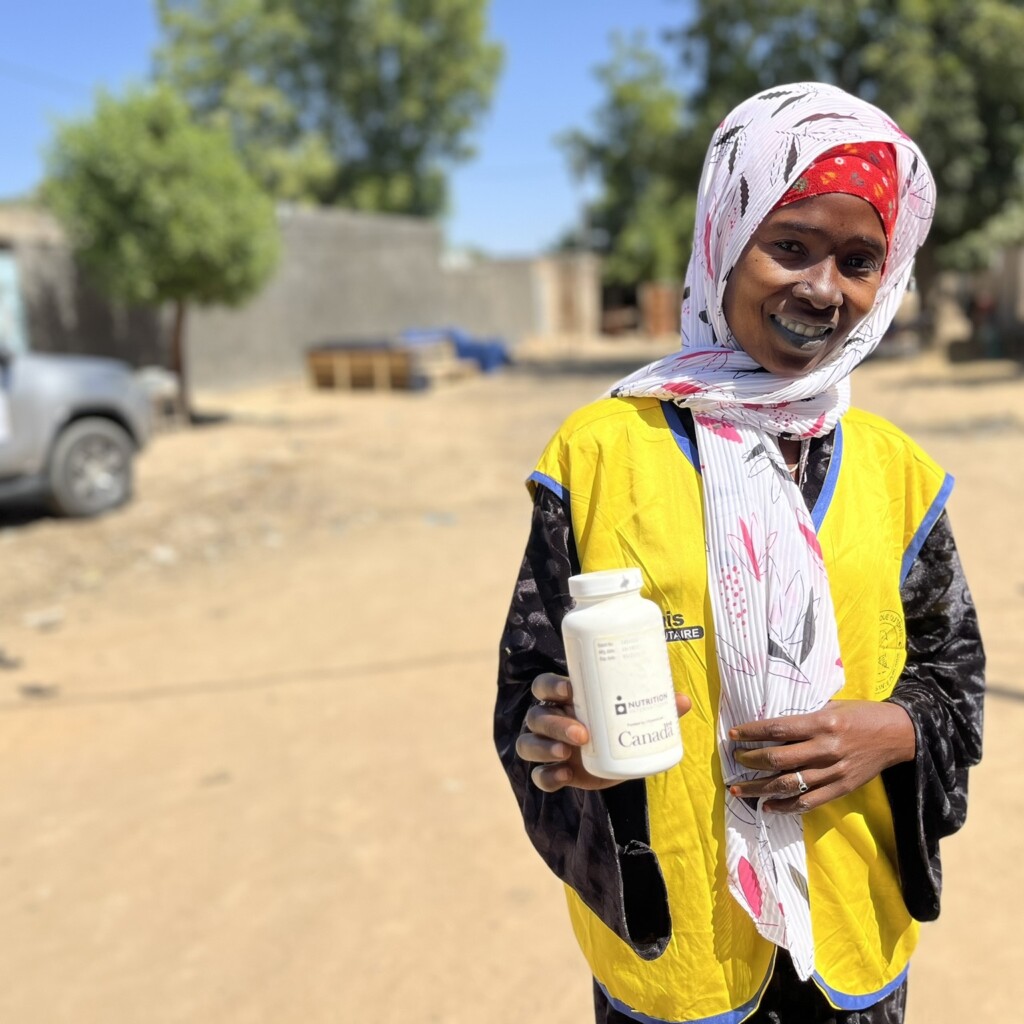
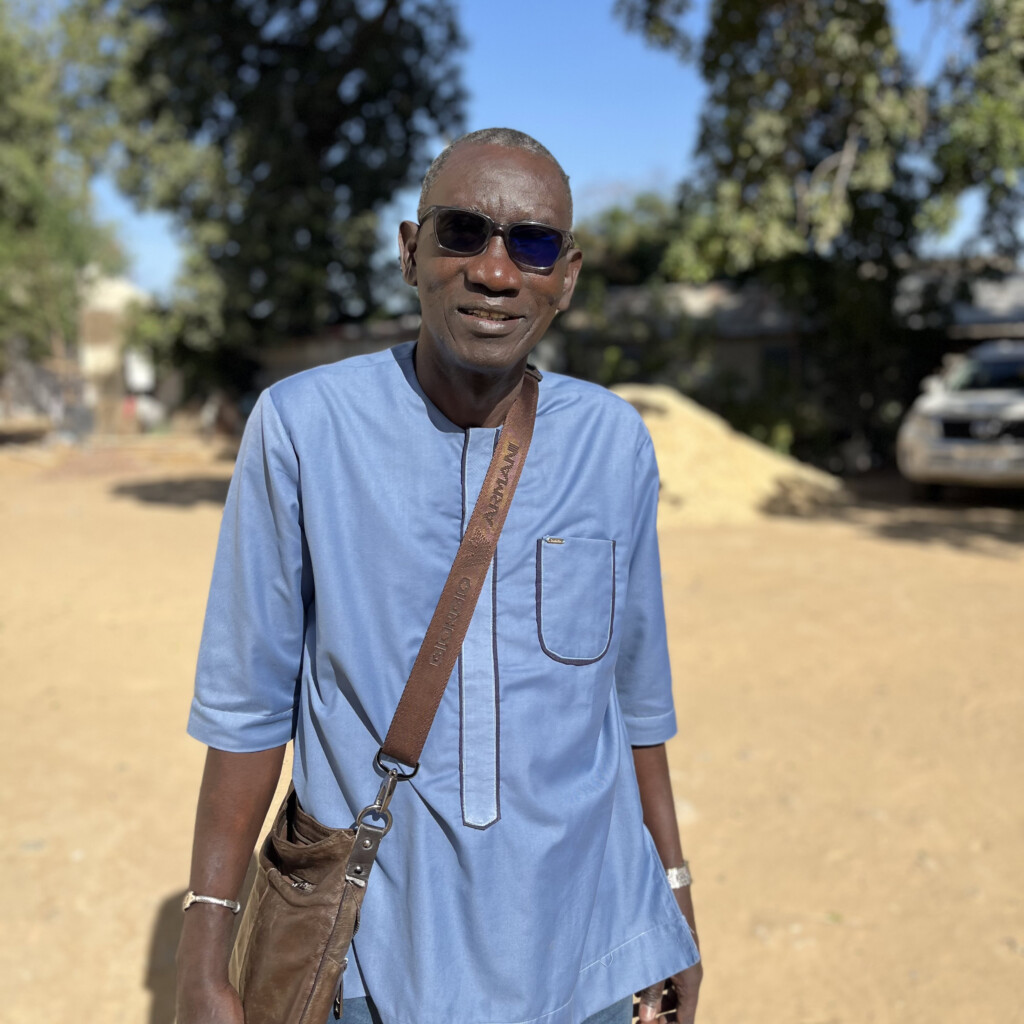
Nutrition International’s child survival programs work to reduce these preventable deaths by addressing the consequences of vitamin A deficiency (VAD) and improving access to and use of zinc and low-osmolarity oral rehydration salts (LO-ORS) for the treatment of childhood diarrhoea.
Vitamin A supplementation
VAD remains a major public health concern, affecting an estimated one in three children under the age of five in low- and middle-income countries. In areas where VAD is prevalent, twice-yearly vitamin A supplementation (VAS) is strongly recommended for children aged 6–59 months and can reduce the risk of all-cause mortality by up to 24%.
As a global leader in VAS for more than 30 years, Nutrition International works alongside governments to strengthen delivery platforms, secure uninterrupted supplies, and improve the availability and use of data to drive action. Through the capsule-in-kind program, we procure and donate between 400M–500M high-dose vitamin A capsules (VACs) each year to eligible countries. In 2024, 55 countries received supplies through this program, ensuring no child was left unprotected due to stock shortages.
In 2024, we continued to support countries to deliver VAS through biannual campaigns, such as Child Health Days and integrated immunization campaigns, and through routine health contacts within the primary healthcare system. In Kenya, we supported the Ministry of Health in developing new software for tracking VACs across the supply chain, helping to reduce stock-outs. In Kenya and Senegal, we partnered with their health ministries to launch implementation research that aims to use VAS as an entry point to reduce missed opportunities and to improve the co-coverage of VAS, vaccination and growth monitoring services. In Malawi, we worked closely with district-level teams to strengthen regular delivery, and in Tanzania, we piloted direct replenishment of VACs from manufacturers to the Ministry of Health and co-developed a work plan to integrate capsule distribution into the national supply chain for greater sustainability and ownership.
Evidence-driven approaches also shaped much of our programming. In Indonesia, following the February 2024 VAS campaign, we commissioned a post-event coverage survey to validate data, assess implementation quality, and identify barriers and enablers to delivery. In India and Kenya, behaviour change campaigns delivered key messages on VAS and dietary diversity — reaching more than seven million people in India and over four million in Kenya through radio, group counselling and interpersonal communication.
Childhood diarrhoea management with zinc and LO-ORS
Diarrhoea remains one of the leading causes of preventable deaths among children under five, with mortality rates in low- and middle-income countries up to 50 times higher than in high-income countries.
In six countries across Africa and Asia, Nutrition International works with ministries of health to improve access to timely and appropriate diarrhoea management using the World Health Organization-recommended treatment of zinc and LO-ORS. Our work focuses on improving policies, guidelines and supply chains, building healthcare-worker capacity and encouraging caregivers to seek treatment promptly.
In Ethiopia and Kenya, we trained community health workers to identify and treat diarrhoea at the community level using the Integrated Community Case Management platform. In Pakistan, we partnered with Greenstar Social Marketing to introduce zinc and LO-ORS into community-based treatment. This initiative was so successful that Greenstar has continued to integrate these treatments into its services. In Bangladesh, we trained and supervised small drug vendors to improve the quality of private sector care and provided on-the-job training.
We also advocated for the inclusion of zinc and LO-ORS into national health and district information systems in Bangladesh, Kenya and Pakistan to strengthen data-driven decision-making. Behaviour change campaigns also played a central role in increasing demand for treatment, with gender-sensitive messages reaching more than nine million people in Nigeria, more than two million in Kenya and more than 140,000 in Pakistan.