Stories
10 stories that shaped our work in global nutrition this year
December 19, 2025

WP_Term Object
(
    [term_id] => 2025
    [name] => Stories
    [slug] => all-stories
    [term_group] => 0
    [term_taxonomy_id] => 2025
    [taxonomy] => news-category
    [description] => Discover the personal stories of people whose lives have been impacted by better nutrition, and those working tirelessly to deliver it, and what’s top of mind for our technical experts as they share the latest on cutting-edge nutrition research, policy updates, and implementation guidance.
    [parent] => 0
    [count] => 363
    [filter] => raw
)


A decade of endeavors: Top milestones in adolescent nutrition
What does a decade of impact look like? To commemorate the 10th anniversary of Nutrition International’s programs in adolescent nutrition, we're reflecting on the progress made and the work that has helped support the empowerment of girls to take charge of their health and thrive.
Posted on October 9, 2026
Through the last decade, Nutrition International’s adolescents and health and nutrition programs have reached diverse girls across continents. In Tanzania, a girl who joined a peer group looking for financial independence trained to become a nutrition and health peer educator herself and built a small business along the way. In Kenya, a secondary school student who dreams of becoming a neurosurgeon now teaches her friends how good nutrition helps them grow. In Ethiopia, a grade eight student found her confidence transformed through a girls’ club built around nutrition and health education. In Bangladesh, a school-based nutrition leader carriers what she learns home, sharing it with her own parents. And in India, a student came to see her period not as something to manage in silence, but as something to understand and talk about openly with her teacher. Individually, these are small moments. Together, across ten years and dozens of countries, they add up to something larger, a decade-long effort to close one of development’s most persistent gaps: the nutrition of adolescent girls.
To celebrate adolescent nutrition programming at Nutrition International, we are exploring some of the top milestone moments that happened over the last decade.

Iron deficiency is considered the most common nutritional deficiency in the and often leads to anaemia. In 2015, Nutrition International launched adolescent programs as part of the Right Start initiative to address exactly this, bringing weekly iron and folic acid supplementation directly to adolescent girls across eight countries in Africa and Asia. Backed by the Government of Canada, the program set out to support countries to establish and expand anaemia reduction programs for adolescent girls and advocate for improved nutrition, embedding the kind of school and community-based delivery that would go on to shape much of Nutrition International’s adolescent nutrition work over the next decade.

That same year marked another shift in approach, the launch of Nutrition Leverage and Influence for Transformation (NLIFT), which set out to embed nutrition into platforms that weren’t built for it in the first place; rather than delivering nutrition programs independently. Anchored by a $25 million investment from the Government of Canada, the model leveraged $24 million more in financial resource and in-kind contributions from 13 co-investing partners across 16 countries in Asia and Africa, ultimately reaching 20 million women and adolescent girls. That reach came through partnerships with organizations already working at scale: a 2017 partnership with the United Nations Populations Fund to integrate nutrition into sexual and reproductive health services in Nigeria and Senegal, A collaboration with Girl Effect that folded nutrition content into its youth media platform for adolescent girls in Indonesia, a partnership with the World Association of Girl Guides and Girl Scouts (WAGGGS), and a partnership with Amref Health Africa to build nutrition into its broader health programming. The approach reflected a strategic bet that nutrition could reach further by joining forces and working through systems that already existed rather than building new ones from scratch.

In 2015, Nutrition International supported the government of Indonesia to initiate WIFAS as part of their school-based health program with a pilot in West Java. Two years later, in 2017, MITRA Youth began delivering weekly iron and folic acid supplementation to school-going adolescent girls in Indonesia’s East Java and East Nusa Tenggara provinces, backed by the governments of Australia, and Indonesia. The program reached 35% of adolescent girls in East Java and 54% in East Nusa Tenggara with supplementation, with 21% of girls in East Nusa Tenggara completing the full recommended course.

In September 2019, Nutrition International turned its attention to a different kind of gap, knowledge itself. Nutrition International launched the Adolescent Nutrition and Anaemia course, a free, 15-module online program designed by our technical experts for nutrition program officers, implementers, policymakers and graduate students working in the field. At the time, most graduate nutrition curricula gave adolescent nutrition little attention, leaving no single resource that pulled the evidence together. The course covered the causes and consequences of anaemia, interventions and global guidelines for improving adolescent nutrition, and lessons drawn from Nutrition International’s own programming, aiming to equip a wider circle of practitioners with the knowledge to act.

In the same year, Nutrition International extended its adolescent nutrition work in Thiès, Senegal, through the Fort pour le Futur project. Partnering with the Counselling Centre for Adolescents, the project was designed to deliver integrated nutrition and sexual and reproductive health services, including weekly iron and folic acid supplementation, to both in-school and out-of-school adolescents living in urban cities, with youth at the center. Working with the International Society for Urban Health alongside the City of Thiès and Senegal’s Ministries of Health, Education and Youth, 90 youth were trained and supported to engage in citizen control with service providers and decision-makers across 19 schools, youth and health facilities to improve the provision of quality services. Building on that foundation, the initiative grew in 2022 with support from Healthy Cities for Adolescents, extending the same integrated model to three target cities across Senegal through 2026.

March 2022 marked the launch of the (Building Rights for Improved Girls’ Health in Tanzania (BRIGHT) project, a seven-year initiative in the Tabora region funded by the Government of Canada. Working alongside the Government of Tanzania and EngenderHealth, BRIGHT takes a youth-centered, gender-responsive approach, combining access to nutrition, life skills training and sexual and reproductive health services to make schools, clinics and communities safer and more supportive places for adolescents to grow up. The project, which will run until 2029, has since reached 218,559 adolescent girls and boys, helped avoid an estimated 108,247 unintended pregnancies, and delivered iron and folic acid supplementation to 274,011 pregnant adolescent girls. The project has also supported pregnant adolescents with access to maternal health and nutrition services, and adolescent girls have had access to care services related to gender-based violence.
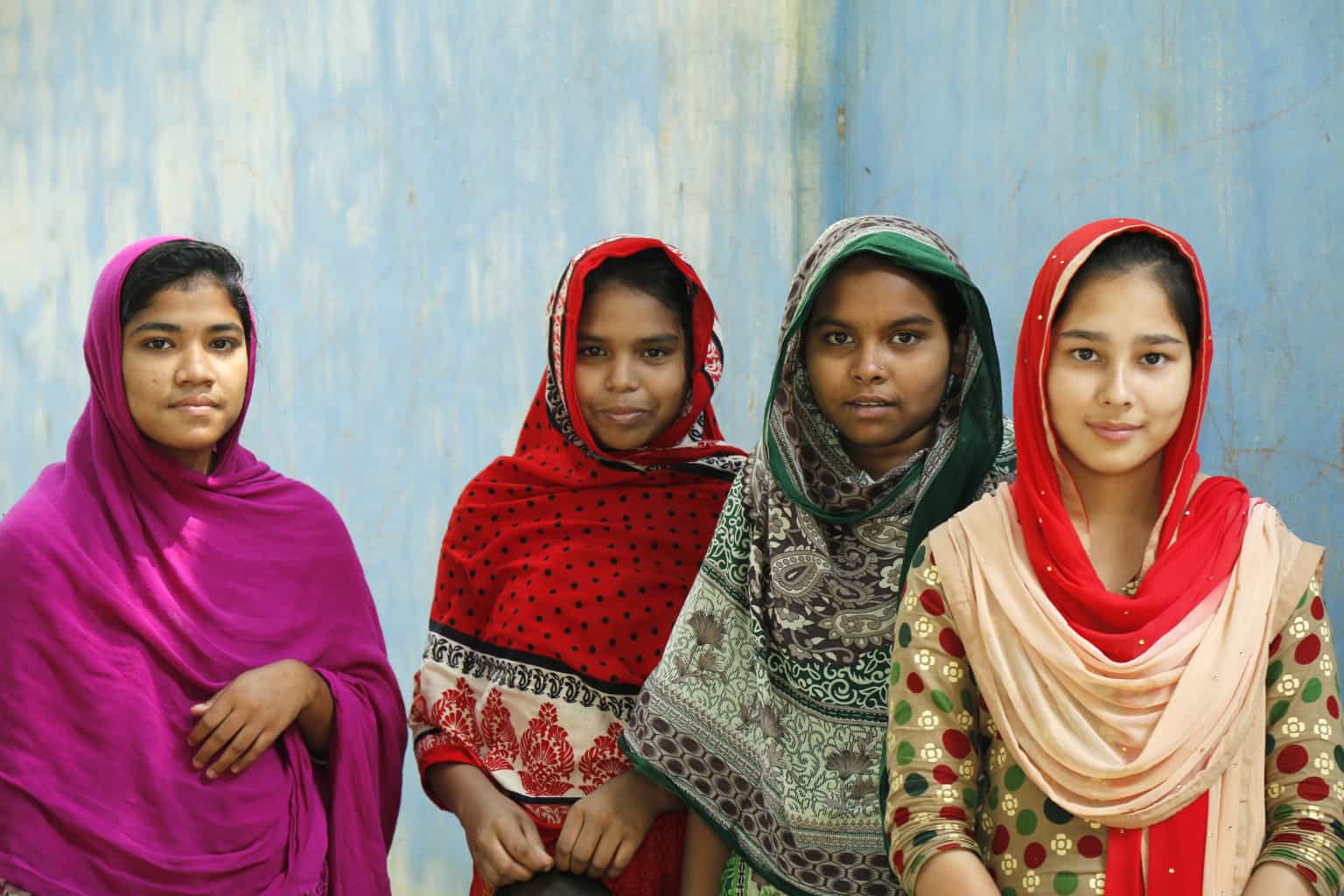
On May 26, 2023, REACTS-IN launched as a $44 million, seven-year project funded by the Government of Canada. Led by World Vision Canada, the project brings together Nutrition International, HarvestPlus, McGill University to improve nutrition and advance gender equality for women, adolescent girls, and children under five in Bangladesh, Kenya, Somalia and Tanzania; countries where overlapping crises, from COVID-19 to conflict to climate change, were projected to push 46.6 million more people into high levels of food insecurity. Nutrition International’s role draws on technical nutrition expertise built over years of work in the region.

On July 26, 2023, the WHO Expert Medicines Committee accepted Nutrition International’s submission to add a new formulation of weekly iron and folic acid supplementation (WIFAS) to the Model List of Essential Medicines (EML), established in 1977 as a reference governments use to select medicines for their populations’ essential healthcare needs. The decision rested on evidence Nutrition International had spent years building — three-arm, randomized, double-blind, placebo-controlled trial, conducted through the Right Start Initiative, testing whether the WHO-recommended folic acid dose was sufficient to meaningfully reduce the risk of neural tube defect-affected pregnancies. The efficacy evidence was presented alongside 5 years of delivery data showing the feasibility and acceptability of adolescent WIFAS programs. With that evidence gap closed and the formulation now on the EML, governments gained a clearer path to adopting WIFAS into their own national programs, accelerating efforts to reduce anaemia and prevent neural tube defects among adolescent girls and women across low- and middle-income countries. Since the 2023 global EML addition of WIFAS, NI has support national EML to be updated in Pakistan, Ethiopia, Senegal, with ongoing support for other countries. A commodity on the national EML signals that it should be available in sufficient quantity and quality to meet the needs of the population, confirming the need for availability and access to WIFAS to address anaemia for adolescent girls.

In 2025-2026, 4.6 million adolescent girls received the full scheme of weekly iron and folic acid supplementation through AWHN programs, averting over 760,000 cases of anaemia. A gap once treated as a footnote in global nutrition has become one of the field’s clearest fronts for measurable progress. The work is far from finished; 30% of adolescents worldwide are still affected by anaemia, but ten years in, the evidence shows what’s possible when adolescent nutrition gets the direct investment and attention it deserves.
Learn more about our work in adolescent health and nutrition.


Related News